
Peels as one option for acne scars
A peel is one option for acne scars, not the only one, and a finished plan should say so. This page sets the standard for judging a peel recommended for scarring.
The standard the guide uses
The guide measures a peel against what dermatology bodies publish, and it expects the plan to name the alternatives. The American Society of Plastic Surgeons keeps an overview of skin rejuvenation and resurfacing where peels appear beside other resurfacing choices.
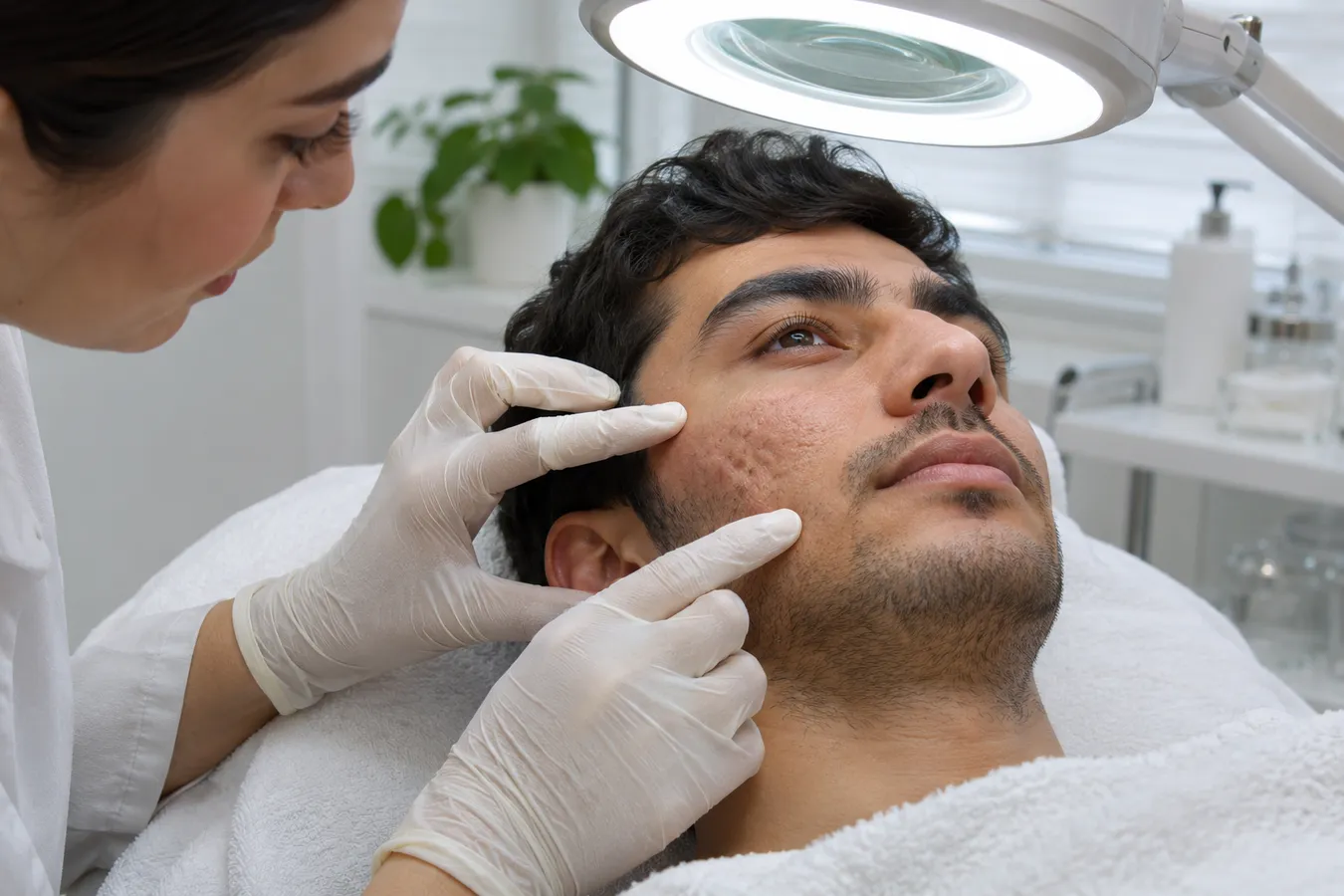
The cited guidance as a checklist
The American Academy of Dermatology describes the aim of a peel in one line: Applying a chemical peel to the skin helps the body produce more collagen and elastin. It also describes how a course is planned: For example, if you have a mild peel, you may need 3 to 5 treatments, which are given every 2 to 4 weeks. From these two sentences, a checklist follows.
- The clinic explains what the peel is meant to do for the scar.
- The clinic gives a number of treatments and the gap between them.
- The clinic says what the plan is if the scar looks the same after a course.
The shortcut and how it shows
The shortcut is a single peel offered as a cure. It shows when no course is described and no other option is named. Cleveland Clinic's guide to melasma treatment, causes and prevention covers a different skin concern, and the American Academy of Dermatology covers melasma diagnosis and treatment too. Knowing which concern you have decides which checklist applies, and the peels in a melasma plan page has that one.
One check before and after the visit
Before the visit, ask for the course in numbers and for the other options considered. After the visit, check that the plan on paper matches what was said. The American Society of Plastic Surgeons also lists its cosmetic procedures in one place, which is a quick way to see what else exists. For the wider guide, return to chemical peels, light to deep.